Hey, just so you know, some of the links on this site are affiliate links. That means I may earn a small commission if you buy something through them. It doesn’t cost you anything extra, and it helps me keep this site running. Thanks for your support!
You do not have to empty the entire closet onto the bed to make progress.
A practical closet decluttering plan works category by category, so each session can end with the closet more functional than when you started.
Use four decisions: keep, move, donate and let go.

Start with the easiest category
Choose one group:
- T-shirts;
- shoes;
- jeans;
- jackets;
- work clothes;
- bags;
- accessories.
Pull out only that category.
This keeps the project contained.
Decision 1: keep
Keep an item in the main closet when it:
- fits your current life;
- is comfortable enough to wear;
- is in usable condition;
- gets chosen regularly;
- works with other items you own.
“Keep” should mean accessible everyday storage, not permanent ownership.
Decision 2: move
Some items are useful but do not deserve prime closet space.
Move:
- seasonal clothing;
- formalwear;
- travel-only items;
- sentimental clothing;
- specialty gear.
Give these items a labeled secondary location if space allows.
Decision 3: donate
Donation works for items that are still usable but no longer serve you.
Possible reasons:
- size or fit changed;
- style no longer matches your life;
- duplicates exceed what you use;
- the item is consistently skipped;
- someone else could use it now.
Use a bag or box that can leave the house promptly. A donation pile sitting in the closet is still closet clutter.
Decision 4: let go
Not everything belongs in a donation bin.
Heavily damaged, stained or unusable items may need textile recycling or disposal depending on local options and material condition.
Do not donate items that are not realistically usable.
Use the “would I choose this this week?” test
Imagine the item is clean and appropriate for the weather.
Would you choose it over your other options?
If the answer is repeatedly no, understand why.
Maybe it is uncomfortable. Maybe it requires a specific occasion. Maybe it duplicates a better item.
The answer helps determine keep versus move versus release.
Create a repair deadline
Keep one small repair bag for items worth fixing.
Write a date on the calendar.
If the repair is not worth scheduling, the item may not be worth storing.
Rebuild the closet by frequency
After decluttering, put the most-used categories in the easiest places.
Daily clothes should be easier to reach than once-a-year clothing.
This may mean:
- moving formalwear to the side;
- lowering frequently used baskets;
- putting everyday shoes at the front;
- storing seasonal items higher.
Do not buy organizers yet
Declutter first.
Then measure:
- shelf width;
- hanging depth;
- drawer dimensions;
- under-bed clearance;
- available floor area.
Buy only for a defined problem.
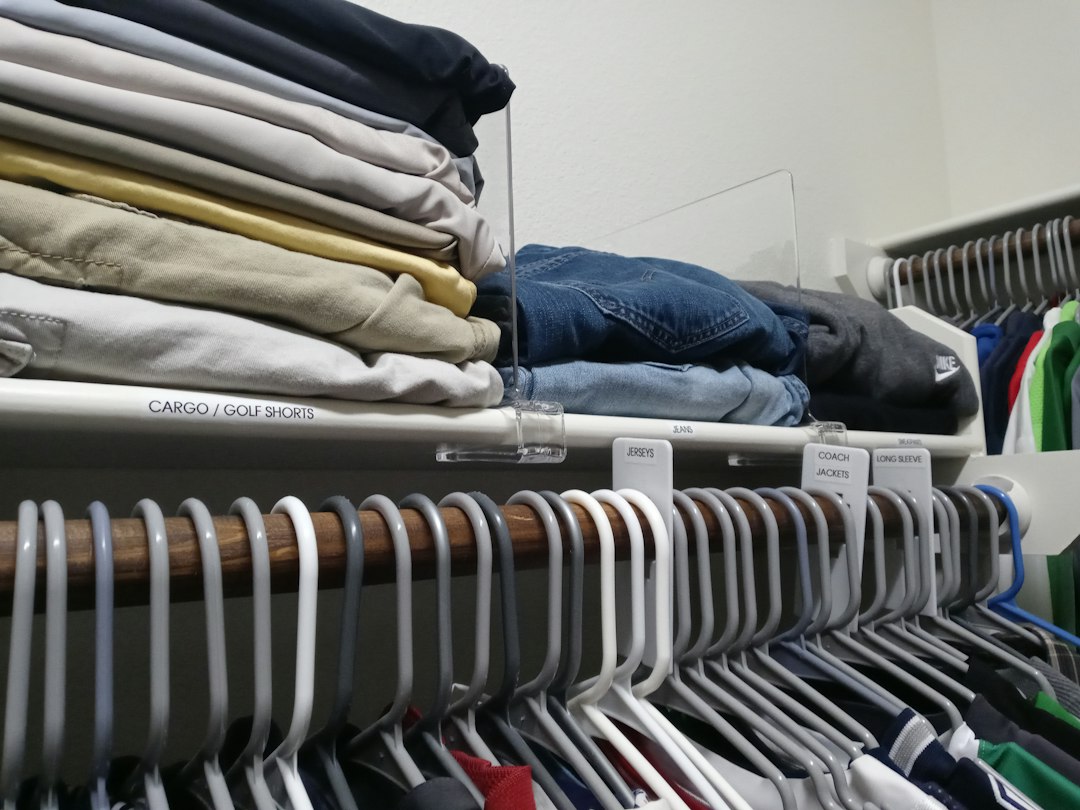
A shelf divider helps unstable stacks. A shoe rack helps floor sprawl. Matching bins do not solve excess volume by themselves.
Quick questions
How much should you remove?
There is no correct percentage. The goal is a closet that stores current clothing without constant reshuffling.
What if you are unsure?
Create one small decision-later section with a review date. Do not let it become a permanent second closet.
Should sentimental clothing stay in the closet?
Only if you actively wear it. Otherwise, separate memory storage from daily wardrobe storage.
After decluttering and measuring the closet, you can compare exact-fit storage tools through Happi Resources or our approved Amazon route. The organizer should solve a measured problem, not create a new category of clutter.
What to do next
Choose one clothing category and complete all four decisions before moving to another.
Then use Build a Simpler Everyday Wardrobe Without Chasing Minimalism to rebuild the closet around real routines.