Hey, just so you know, some of the links on this site are affiliate links. That means I may earn a small commission if you buy something through them. It doesn’t cost you anything extra, and it helps me keep this site running. Thanks for your support!
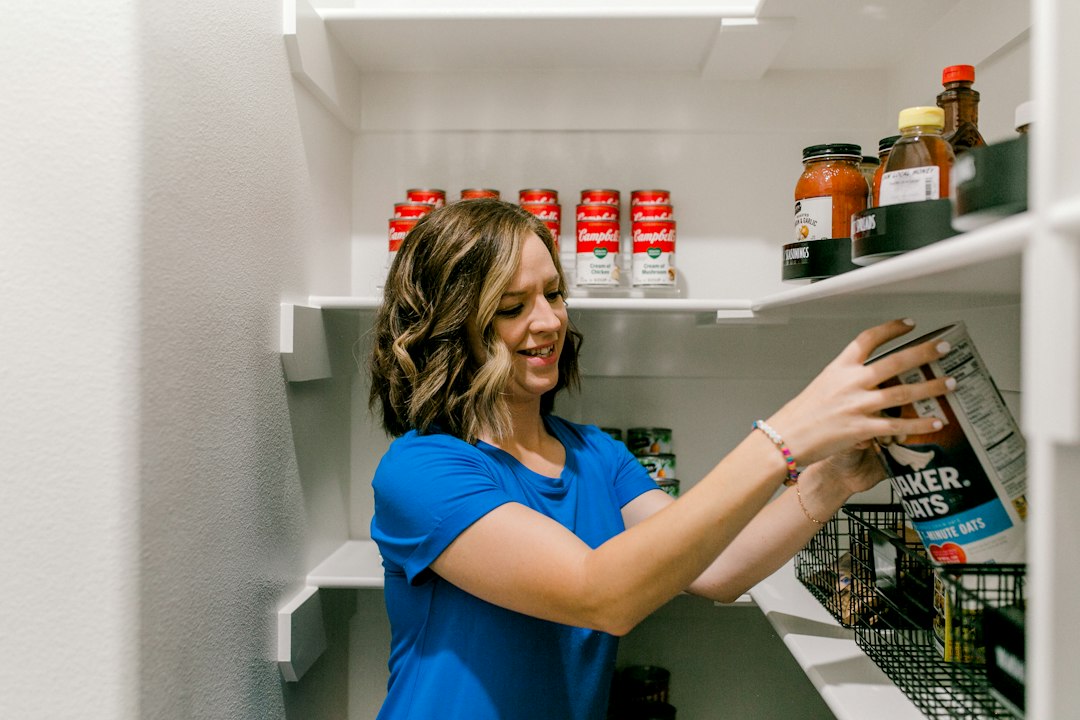
Quick answer: organize a pantry around how food is actually used. Put everyday breakfast, lunch, snack and cooking items where they are easiest to reach. Keep backups visible, group ingredients by function and use containers only when they solve a specific access or storage problem.
A pantry can look beautiful and still be difficult to use.
Start with how your household eats
Before buying bins, identify the categories that appear in normal meals.
Your pantry may need zones for:
- breakfast;
- lunch packing;
- snacks;
- dinner staples;
- baking;
- drinks;
- backups.
Another household may need completely different zones.
Put high-frequency items in prime space
Eye-level shelves should serve what you use often.
Move low-frequency items higher or lower:
- holiday ingredients;
- specialty appliances;
- bulk backups;
- rare baking supplies.
Do not give prime shelf space to something simply because the package is attractive.
Group ingredients by the task they support
A pantry is easier to use when related items live together.
Examples:
- pasta + sauce + related dinner staples;
- lunchbox snacks together;
- coffee/tea supplies near the drink area;
- baking ingredients in one zone.
This shortens meal preparation because you are retrieving a set, not searching several shelves.
Keep package information when it matters
Decanting every dry good into a clear container may look consistent, but original packaging often carries preparation instructions, dates, allergen information and manufacturer details.
If you transfer food, keep the information you need and use food-safe containers appropriate for the product. Do not decant simply for appearance.
Create a visible backup zone
Backups should be easy to count.
Place extras together so you can see whether you already have another jar, box or bag before adding it to the shopping list.
A “first in, first out” approach can help older packages remain visible instead of being buried behind newer purchases.
Use bins for unstable categories
Bins are useful when small packets, bags or pouches fall over or migrate.
Good candidates:
- snack packets;
- baking add-ins;
- small seasoning envelopes;
- lunchbox items.
A sturdy shelf may need no bin at all for canned goods or boxed staples.
Leave some empty space
Do not fill every inch.
Open capacity gives new groceries somewhere to go and makes it easier to move items forward.
Common mistakes
- buying a complete container set before editing the pantry;
- hiding food in opaque bins without labels;
- separating items that are always used together;
- keeping too many bulk backups;
- putting children’s or daily items where they are difficult to reach safely;
- organizing for photographs rather than normal meal preparation.
Buy storage only for a measured problem
A shelf riser may help a tall shelf. A turntable may help a deep corner. A clear bin may help loose snack packets. Measure first.
Browse Happi Resources or compare current organizer sizes through our approved Amazon route when a specific tool solves a real problem.
What to do next
Choose the pantry shelf used most often and reorganize only that shelf around actual meals.
Then use How to Declutter a Kitchen Without Emptying Every Cabinet at Once for the rest of the kitchen.