Hey, just so you know, some of the links on this site are affiliate links. That means I may earn a small commission if you buy something through them. It doesn’t cost you anything extra, and it helps me keep this site running. Thanks for your support!
A desk day does not have to become an all-day sitting session.
You can add small movement breaks around normal work without turning the office into a gym or trying to follow an exact minute-by-minute routine.
The current U.S. Physical Activity Guidelines emphasize a simple principle for adults: move more and sit less. Federal guidance also notes that some physical activity is better than none and that activity can be accumulated across the week. There is not one universal rule that everyone must stand up every specific number of minutes.

Source: U.S. Office of Disease Prevention and Health Promotion — https://odphp.health.gov/our-work/nutrition-physical-activity/physical-activity-guidelines/current-guidelines
CDC overview: https://www.cdc.gov/physical-activity-basics/guidelines/adults.html
Start with the easiest break you will actually repeat
A movement break can be simple:
- walk to refill water;
- stand during a short phone call;
- take a lap through the house or office;
- walk outside for a few minutes;
- use the stairs for one trip;
- do a few comfortable, non-strenuous movements beside the desk.
The point is to interrupt long periods of inactivity with movement that fits your day.
Use work events as movement cues
Timers help some people, but natural cues can be easier to maintain.
Try moving:
- after finishing a meeting;
- between two major tasks;
- after sending a report;
- before lunch;
- when you refill coffee or water;
- after a long phone call.
This makes movement part of the workflow instead of another appointment.
Create a two-minute version for busy days
Your movement break does not need to become a workout.
A two-minute version could be:
- stand up;
- walk to another room;
- refill water;
- return to the desk.
On a less crowded day, extend the walk. On a packed day, keep the short version.
Take some work away from the chair
Look for tasks that do not require sitting.
You may be able to:
- read a short document standing;
- listen to a meeting while walking if participation requirements allow;
- make a phone call away from the desk;
- move brainstorming to a whiteboard;
- place the printer or water bottle farther away.
Small changes in layout can create movement without relying on willpower.
Do not confuse movement breaks with a full exercise plan
Short movement breaks can make desk days more active, but they are not automatically a substitute for broader weekly physical activity.
CDC guidance for adults describes a weekly target of at least 150 minutes of moderate-intensity aerobic activity plus muscle-strengthening activity on at least two days, while also emphasizing that activity can be broken into smaller chunks and that some is better than none.
That is population-level guidance, not an individualized prescription.
Keep the setup simple
You do not need special equipment for most desk-day movement breaks.
Useful basics may include:
- comfortable walking shoes;
- a clear path through the workspace;
- a water bottle;
- a stable standing surface;
- weather-appropriate outerwear if you take short outdoor walks.
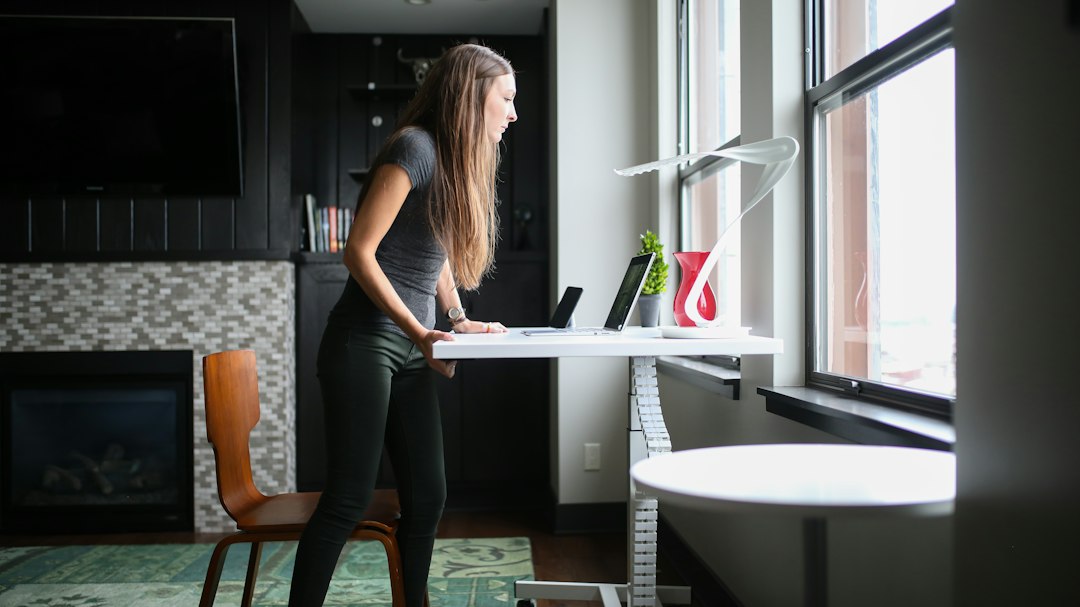
A standing desk can be useful for some work styles, but it is not required to create movement.
Common mistakes
Trying to compensate with an exhausting break
A movement break should help you resume the day, not derail it.
Setting too many reminders
If five alarms are ignored, add one reliable cue instead.
Turning movement into a perfection project
The goal is not to optimize every minute. It is to create more opportunities to move.
Ignoring comfort or symptoms
If a movement causes pain, dizziness or other concerning symptoms, stop. People with health conditions, mobility limitations or questions about appropriate activity should seek individualized guidance from a qualified health professional.
A simple desk-day pattern
Try this flexible structure:
- morning: one short walk after the first work block;
- midday: leave the desk for lunch when practical;
- afternoon: one standing task or brief walk;
- end of day: walk or move before transitioning into the evening.
That may be enough to make movement feel normal rather than forced.
What to do next
Choose one work event that happens most days and attach a two-to-five-minute movement break to it.
For a broader beginner setup, continue with The Simplest Beginner Home Workout Setup: What You Actually Need and the Active Lifestyle hub.