Hey, just so you know, some of the links on this site are affiliate links. That means I may earn a small commission if you buy something through them. It doesn’t cost you anything extra, and it helps me keep this site running. Thanks for your support!
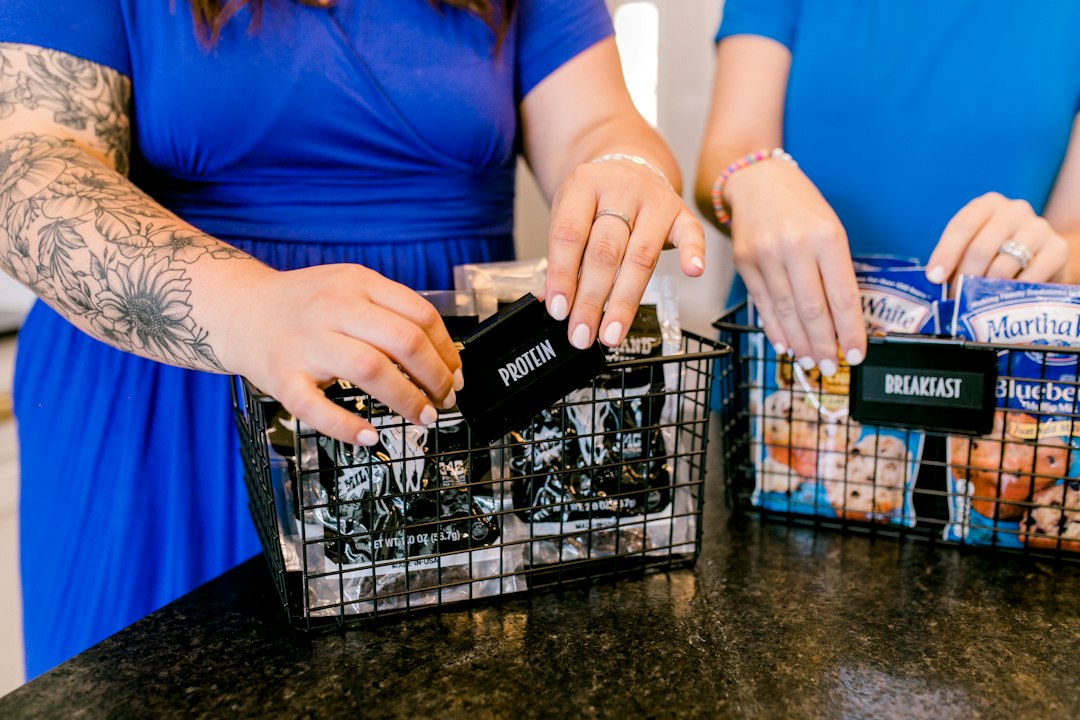
If your organization system depends on remembering what is inside every bin, drawer or shelf, labels can reduce unnecessary searching.
You do not need a label maker to get the benefit. Handwritten labels may be faster, cheaper and easier to change. A label maker may be worth it when consistency, readability or repeated use matters.
Quick answer
Choose handwritten labels when you need speed, flexibility and almost no setup.

Choose a label maker when you want consistent, durable-looking labels across many containers or workspaces.
Neither option is automatically better. The right choice depends on how many labels you need, where they will be used and how often they will change.
Handwritten labels: strengths
Fast to start
A marker and removable label are enough.
Easy to revise
If a bin changes from “winter gear” to “pet supplies,” replacing the label takes seconds.
Low cost
You may already own everything you need.
Good for temporary systems
Handwriting works well while you are testing whether an organization system is practical.
Handwritten labels: limits
Handwriting can be inconsistent or difficult for other household members to read. Ink may smear depending on the surface. Temporary paper labels may not hold up well in bathrooms, garages or high-use areas.
Those limits may not matter for a short-term project.
Label makers: strengths
Consistent appearance
Printed labels create a uniform system across many containers.
Easier shared readability
Clear printed text can help multiple people use the same storage system.
Useful for repeated labeling
If you label files, cables, pantry bins, tools or office supplies regularly, a dedicated device can reduce setup time after the initial learning curve.
Multiple material options
Depending on the device and tape type, labels may be designed for different surfaces and conditions.
Check the manufacturer’s current tape compatibility, adhesive guidance and environmental limits before choosing a model.
Label makers: limits
Upfront cost
The device costs more than a marker.
Ongoing supplies
Tape or cartridges become a recurring expense.
Proprietary formats
Some systems work only with specific cartridge sizes.
More friction for one-off labels
Opening an app, connecting a device or loading tape can be excessive if you need only two labels.
Side-by-side decision factors
Cost
Handwriting usually wins for occasional use. A label maker becomes easier to justify when it will be used repeatedly.
Speed
Handwriting is fastest for one or two labels. A label maker can be faster for a large batch after setup.
Appearance
Printed labels are more consistent. Handwritten labels can still look intentional if you use one marker style and label size.
Flexibility
Handwritten removable labels are easier for systems still changing.
Durability
This depends on the material, adhesive, environment and surface. Compare actual manufacturer specifications rather than assuming every printed label is waterproof or permanent.
A smart hybrid approach
You do not need to choose one method for the whole house.
Use handwritten labels for:
- temporary decluttering bins;
- donation boxes;
- project boxes;
- changing pantry categories.
Use printed labels for:
- long-term file folders;
- cable identification;
- storage bins with stable categories;
- shared household systems.
Do not label before you declutter
A label does not make unnecessary stuff more useful.
First decide what belongs in the space. Then group similar items. Add labels only where they help someone find or return something.
Buying checklist for a label maker
If you decide a label maker fits your needs, compare:
- supported tape widths;
- keyboard vs phone/app input;
- power source;
- cartridge availability;
- label material options;
- print preview;
- replacement tape cost.
Treat this as research-based selection unless you have personally tested the product.
If a label maker fits the system you have chosen, compare current models and tape formats through Happi Resources or our approved Amazon route. Buy only after you know the label widths and environments you need.
What to do next
Choose one space where people repeatedly ask, “Where does this go?” Test handwritten labels first if the system is still changing. Upgrade to printed labels when the categories are stable and repeated use justifies it.
For more storage decisions, continue through Smart Living & Useful Products and the small-space organization guides.